Financial Services Leadership
Composure Isn't the Same as Freedom From What You Carry.
Financial leaders and advisors are trained to manage risk and uncertainty for other people. No one trains them to set down what they still hold against a partner, the firm, a client, or themselves. Dean does.
For the executives of financial services firms, and for the advisors who carry a book of clients and every relationship in it.
What financial leaders and advisors are carrying:
- The partner who left and took the book of business with them
- The board or managing director who needed someone to blame, and chose them
- The client who held them responsible for what the market did
- The colleague who quietly moved a client they had spent years earning
- The firm that promised them a path and gave it to someone else
- The advice that went wrong, or the layoffs they ran, that they still hold against themselves
Why Dean, For This Room
Dean didn't learn this from research. He carried it first.
When Dean was twelve, his mother was murdered by his stepfather. He carried it the way most leaders carry what they carry: quietly, certain he was fine, and paying for it in every room he led. The forgiveness work that followed became the award-winning documentary Live to Forgive. What he carried was extreme. The pattern was not.
Twenty years speaking on the weight leaders carry. Coaching executives since 2013. A Master's in Organizational Leadership. Author of The Forgiveness Habit. And a method grounded in three decades of peer-reviewed forgiveness research, including a Stanford randomized trial in which 259 adults trained in forgiveness showed less stress and less anger than a control group four months later.
What Dean Addresses in This Room
Dean will not spend a financial room's time on the market. Losses are the cost of the business, and the people in these rooms understand that better than any speaker. What he addresses is the person attached to the loss: the one they hold responsible, the one who held them responsible, or themselves.
That weight outlasts the quarter. The work that releases it is forgiveness, practiced as a leadership discipline: in private, needing nothing from anyone else, excusing nothing, and letting no one off the hook. It is what the E.D.G.E. Forgiveness Development Method is built for, and nothing else.
Leading After Betrayal: From Guarded to Clear-Eyed
The partner, the firm, the client who broke trust. Releasing the resentment while keeping discernment, accountability, and clear boundaries fully intact. Forgiveness changes what the leader carries, not what the other person answers for.
You Can Keep the Lesson Without Carrying the Weight
The core message for this room: a hard season leaves behind two things, what it taught them and who they still blame for it. The method keeps the first and releases the second, so the next call is made on judgment rather than on an old score.
Composure Is Not the Same as Freedom
Why the people who stay calmest under pressure, with a client or with a board, can be the ones carrying the most, and what that composure costs when the grudge underneath it is still running the nervous system.
The Advisor's Weight: The Client, the Colleague, and the Years
For advisors and the leaders who manage them: the client who left after a decade, the colleague who took one, the firm that changed the terms. The resentment that quietly makes a practice defensive, and the discipline that releases it without lowering a single standard.
The Decision They Still Hold Against Themselves
The advice that went wrong, the layoffs they ran, the call made with the numbers they had. Forgiving your own decision never means excusing it. It means the judgment that call has been consuming comes back for the next one.
“You can keep the lesson without carrying the weight.”
Designed for the leaders of banks, credit unions, wealth and asset management firms, private equity, insurance, and fintech, and for the advisors who built a practice one relationship at a time. The answer to what they hold is not more composure. It is a discipline no one ever taught them.
The Keynote for This Room
The Unburdened Leader
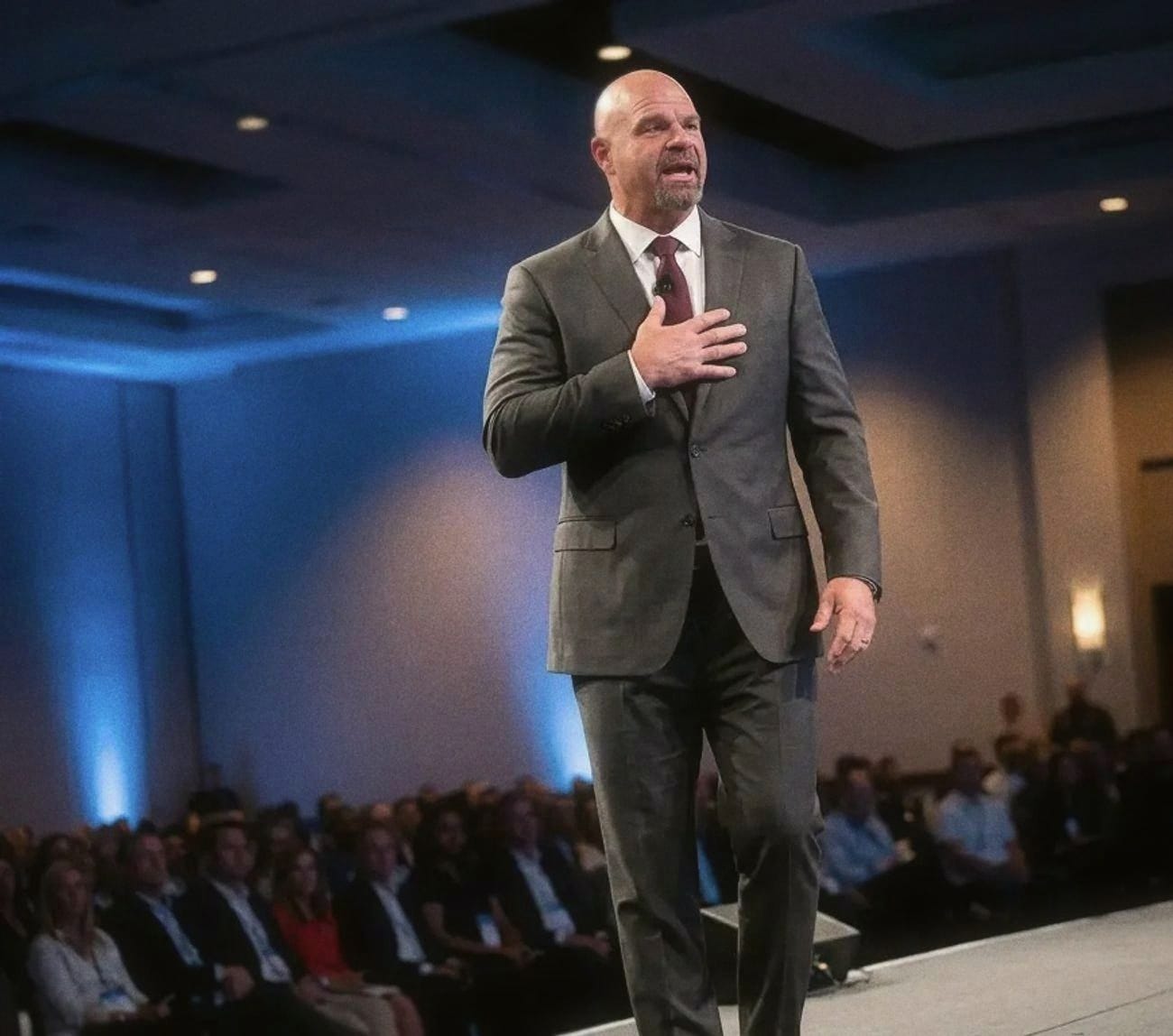
Dean's signature executive keynote, adapted to financial services: the people a financial leader or advisor still holds something against, and the E.D.G.E. Forgiveness Development Method that sets the weight down without losing the lesson.
When One Talk Isn’t the Whole Engagement
Workshops
Half-day and full-day sessions where leaders work the E.D.G.E. Method, not just hear it.
Learn more →Executive Coaching
6 or 12 months, one leader at a time.
Learn more →Organizational Partnerships
Annual programs and enterprise-wide capacity building.
Learn more →Designed for leadership summits, advisor and producer conferences, partner retreats, and the executive teams of financial firms.
Reading this as an advisor or executive carrying something of your own? Executive Coaching →
Ready to Talk?
Let's Discuss Your Firm or Your Conference
Every engagement starts with a conversation about your organization's goals, audience, and timing.